Call Us
  Schedule Consultation


Shape, Balance, Confidence
Year after year, breast augmentation remains the number one cosmetic surgical procedure performed in the United States.
Women have breast augmentation for many reasons, including to obtain better body proportion, enjoy better fitting clothes and bikinis, improve self-confidence, and feel more feminine and sexy. Women who want breast augmentation are looking for the best plastic surgery results to achieve their aesthetic goals, which is why they come to Orange County breast augmentation surgeon Joseph T. Cruise, M.D.

1 of 76
Dr. Cruise has an extensive gallery of breast augmentation procedure before and after photos. You can see for yourself examples of his "close cleavage" approach as well as various results showing upper fullness vs. lower fullness and conservative vs. dramatic breast size. Achieving "The Look You Want" is the ultimate goal and can be achieved with top breast augmentation surgeon Dr. Joseph T Cruise, MD.


During your consultation with Dr. Joseph T. Cruise at his Newport Beach plastic surgery office, he will use your personal information and desired goals to help determine the "Look You Want" to achieve with breast augmentation surgery.
This aspect of Dr. Cruise's software program allows women to visualize the different results possible with surgery and gives him a clear picture of the "Look You Want." This feature bridges the gap between patient-surgeon communication and greatly reduces the need for revision surgery due to unclear expectations.
Dr. Cruise is board certified by the American Board of Plastic Surgery. He is also a member of the American Society of Plastic Surgeons, and the American Society for Aesthetic Plastic Surgery, which is limited to cosmetic surgeons specializing in aesthetic surgery.
In addition, Dr. Cruise has joined the Orange County Society of Plastic Surgeons, an esteemed local group dedicated to safety, excellence, and integrity in cosmetic surgeries such as breast augmentation. He is one of the top doctors for breast augmentation in Orange County. Because of his credentials and experience, many patients also seek him out for breast augmentation revision after having surgery elsewhere and not being happy with their result.
Dr. Joseph Cruise realizes that an important aspect of any surgery is the anesthesia and that many women are sensitive and suffer unpleasant effects from it. In order to offer patients the most comfortable breast augmentation procedures possible, Dr. Cruise only works with Orange County board-certified anesthesiologists who are specialists in cosmetic surgery and provide gentle, outpatient anesthesia. Below you can learn more about Dr. Cruise's primary anesthesiologist, Dr. Cedric Choan.
Below we have categorized the most important and popular breast augmentation topics into sections. Reading through this information will help you become further educated about the breast augmentation procedure details.

Unlike many other cosmetic procedures, most patients are good candidates for breast augmentation in Newport Beach, CA. There are very few conditions that would cause a patient to be an unsuitable candidate. The two primary reasons someone is unable to have breast augmentation surgery: Serious underlying medical issue. Patient takes regularly a prescribed medication that is not allowed when having surgery and cannot be stopped
While most patients are eligible for breast augmentation surgery, there are some women who may also need a breast lift to achieve their desired result. If you have experienced significant weight loss and/or gain, pregnancy, breastfeeding, or just naturally have sagging breasts, Dr. Cruise may recommend a breast lift along with breast augmentation. Measurements will be taken during your consultation to determine whether or not a breast implant alone will provide the lift you need or if a breast lift with augmentation is needed.
During your consultation with Dr. Cruise, not only will he review your health history, but he will also provide a physical exam which will include measurements of your breasts and chest wall. This evaluation will help determine the best procedure, implant type, and incision location for your treatment plan. Please visit our physical exam page for more information.
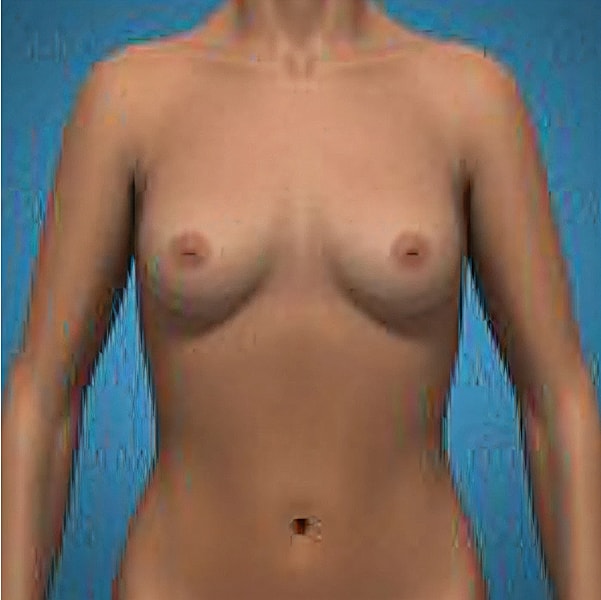
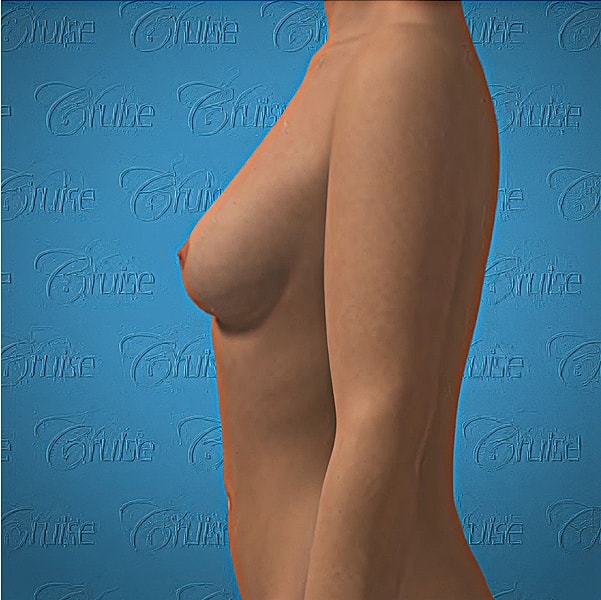
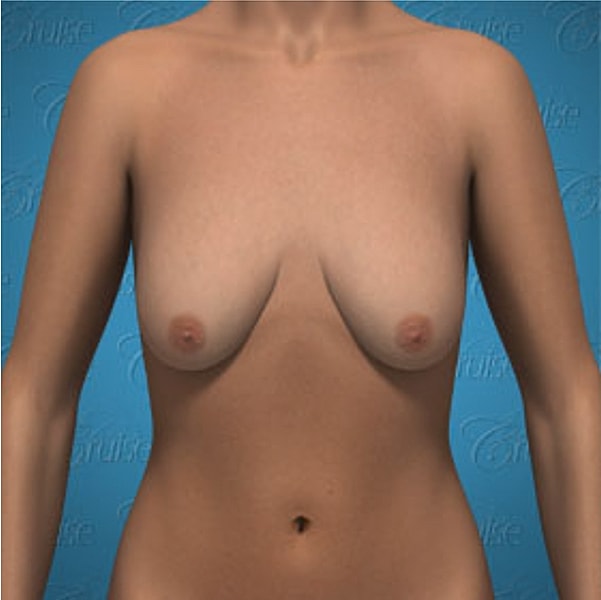
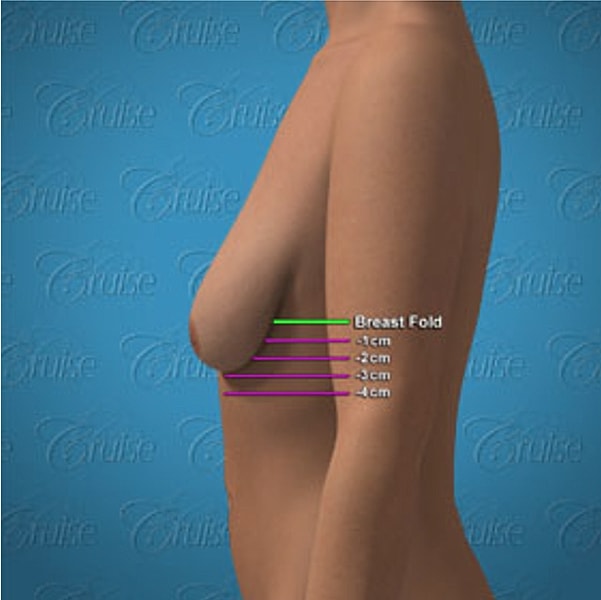
Our Orange County breast augmentation is a surgical procedure that uses implants to increase the size and improve the shape of the breasts.
It can correct volume loss after pregnancy or weight loss, create a more proportioned silhouette, or simply help women feel more at ease in their bodies. At Cruise Plastic Surgery, the goal isn’t just size—it’s balance. Every augmentation is customized to fit your anatomy, lifestyle, and aesthetic preferences. You’ll work with Dr. Cruise to select the right implant type (saline or silicone), size, shape, and placement. The final look should feel like a natural part of you—enhancing your presence, not overpowering it.
Saline breast implants have a silicone shell and are filled with a sterile salt water solution. They are inserted while still deflated into the breasts and then filled once they are in place. The fill amount can be customized within a specific volume range based on the size and shape of the implants.
Silicone breast implants are pre-filled with silicone gel, which is a thick, sticky fluid that is very similar in feel to human breast tissue. Many women feel that silicone implants look and feel more like natural breast tissue.
Additional Information About Silicone and Saline Implants
Joseph T Cruise, MDs's Complete Sub-Muscular Coverage
Implants can be placed in one of three ways:
Subglandular implant placement was standard in the early days of breast augmentation. However, high rates of capsular contracture, visible rippling, and an overly artificial look led most board-certified plastic surgeons to shift toward placing implants beneath the pectoralis major muscle.
Our skilled physicians can adjust the laser beam's settings to provide tailored treatments ranging from gentle "cold ablation" to more intensive laser skin resurfacing work, depending on your specific needs and goals.
Which Dr. Cruise refers to as the “bookend” technique—allows the pectoralis minor, serratus anterior, and parts of the external oblique muscles to act like firm supports for the breast implants. Unlike many other surgeons, Dr. Cruise uses the complete sub-muscular coverage technique in most breast augmentation procedures. This structural support not only helps maintain closer cleavage over time but also adds a thicker tissue layer, which can significantly reduce visible rippling in thinner patients. Other benefits include a reduced risk of bottoming out and minimized implant migration toward the armpit, promoting enhanced aesthetics and long-term implant stability.
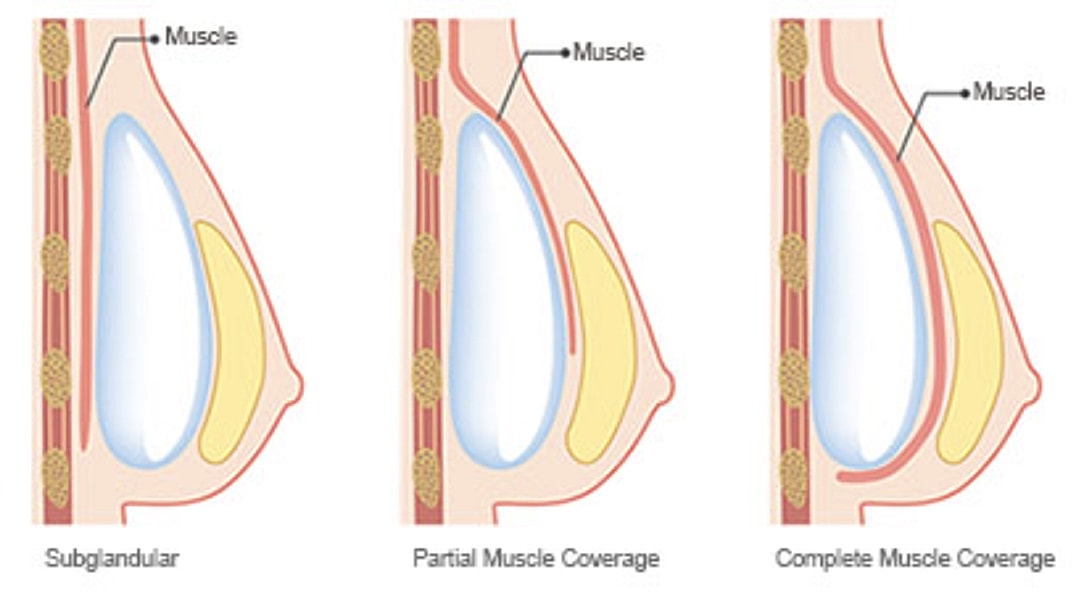
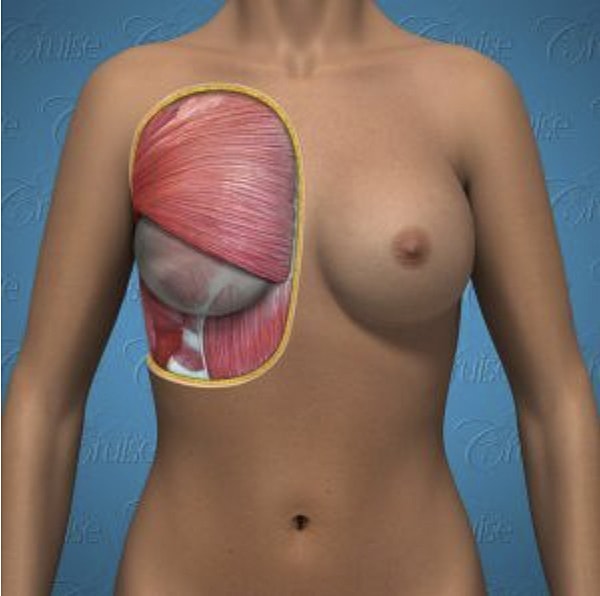
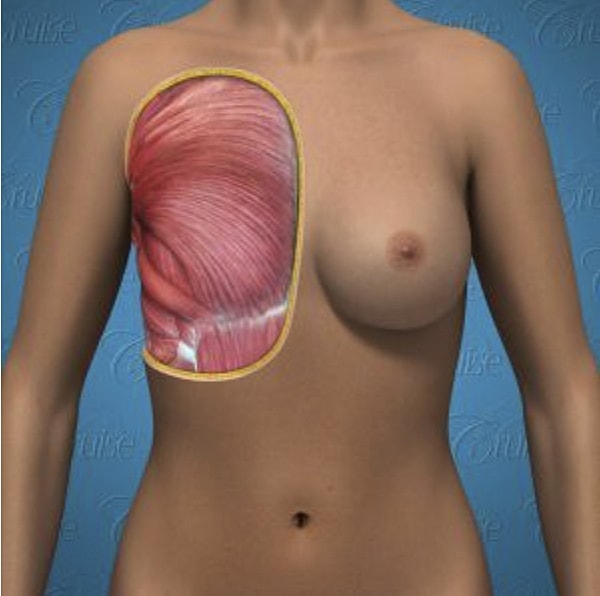
To provide the best, longest-lasting breast augmentation results for his patients, Dr. Cruise performs this surgery by inserting the breast implants under complete breast muscle coverage.
This means instead of placing the implant under just the pectoralis major muscle, as most plastic surgeons do, Dr. Cruise places the implant under additional muscles as well. This complete muscle coverage technique has several important purposes, especially for Newport Beach, CA breast augmentation patients who desire close cleavage. Over time, breast implants often shift to the sides as breast tissue weakens, but full muscle coverage allows for closer cleavage with a reduced risk of cleavage widening.
Dr. Cruise likes to reference this as the "bookend" technique. Full muscle coverage acts like book ends, supporting the breast implants so they don't move laterally into the armpit. These stronger muscles are less likely to allow the implants to shift, and they provide a thick buffer that effectively reduces or prevents the skin rippling effect that can occur with other types of breast augmentation.
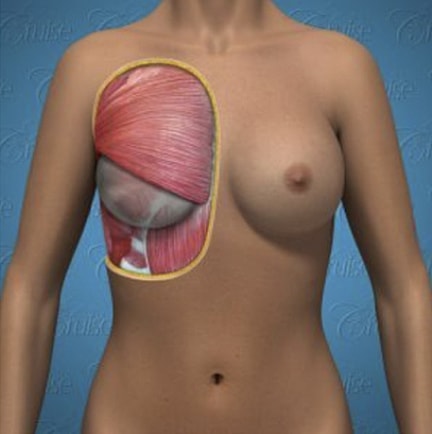
50% of implant uncovered
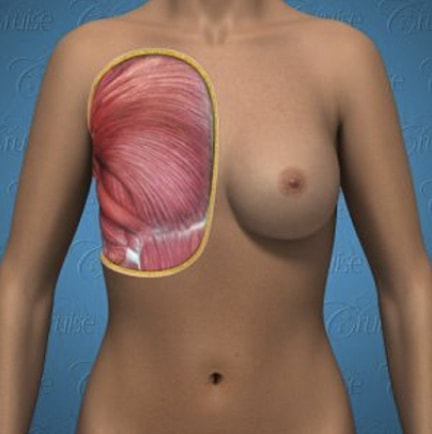
Complete lateral coverage of implant
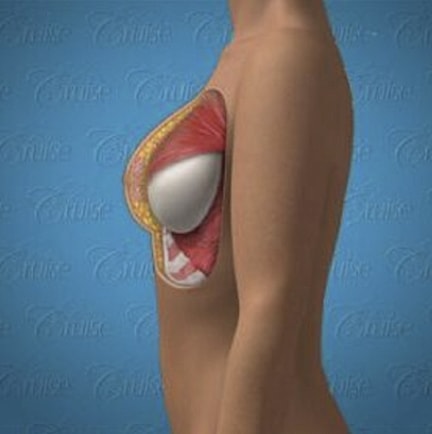
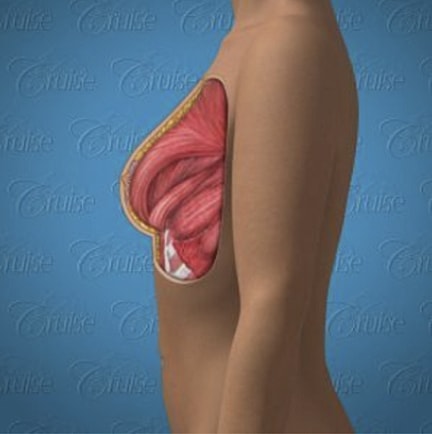
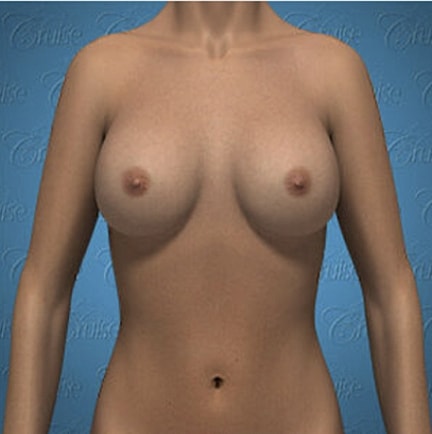
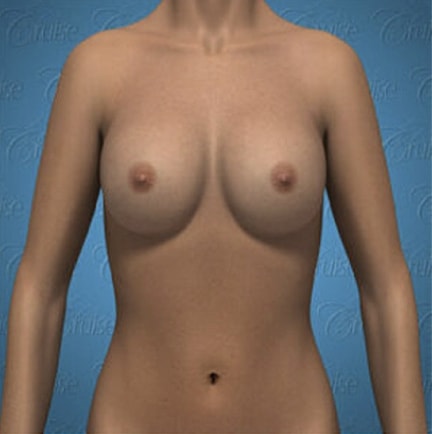
Better cleavage as muscle prevents implants from sliding
Complete muscle coverage adds coverage and support over the outer parts of the breast implants. This has two benefits:
The lower an implant is placed during a breast augmentation procedure, the more the implants will separate. Placing an implant low has the advantage of lifting the nipple slightly. However, lowering the implant too much may cause "bottoming out" and sliding of the implant toward the armpit.
High implants create more upper breast fullness, the appearance of a longer, thinner abdomen, and a perkier look for the breasts overall.
Low implants create lower breast fullness, a more concave slope to the upper breast, and give more lift to the nipples. However, lower implants mean less upper breast fullness, less cleavage, and a shorter abdomen.

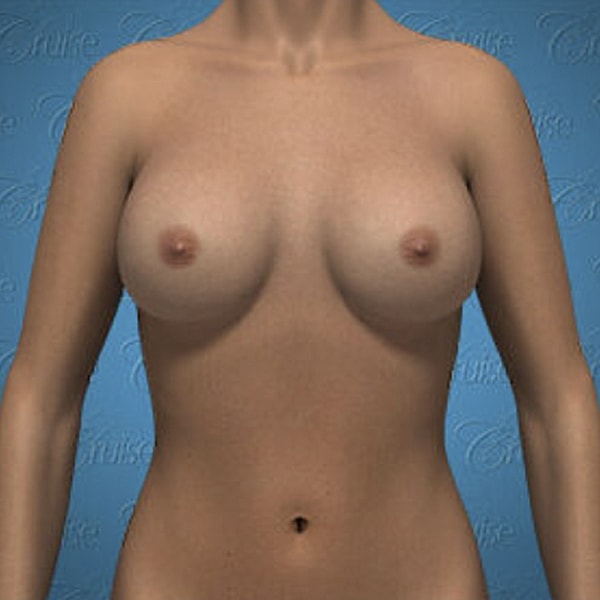
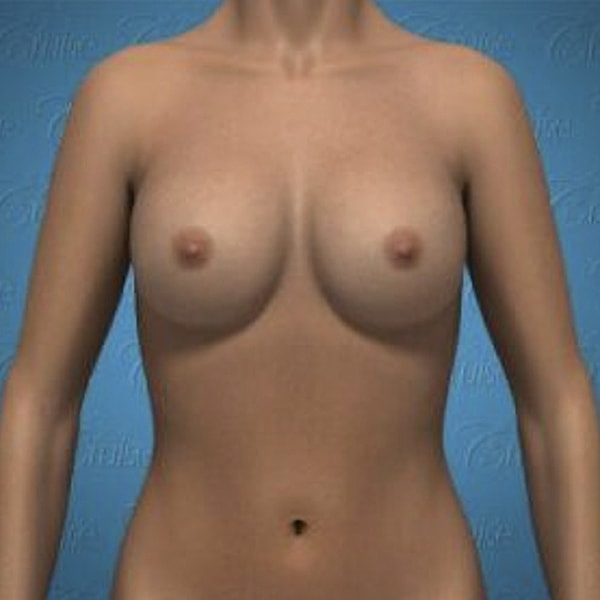
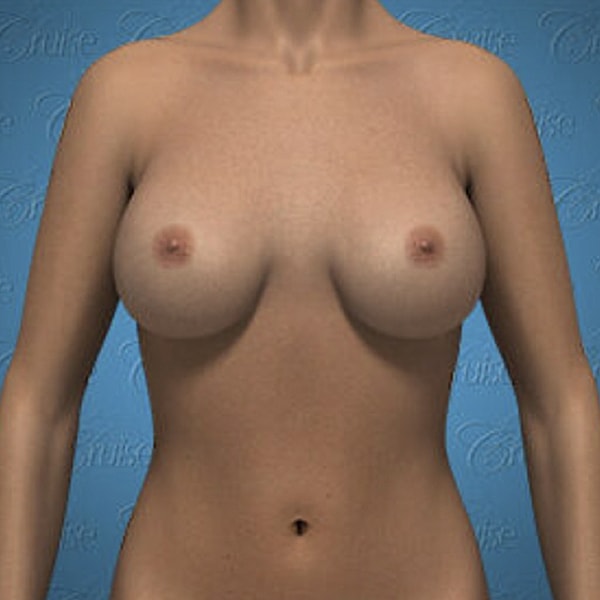
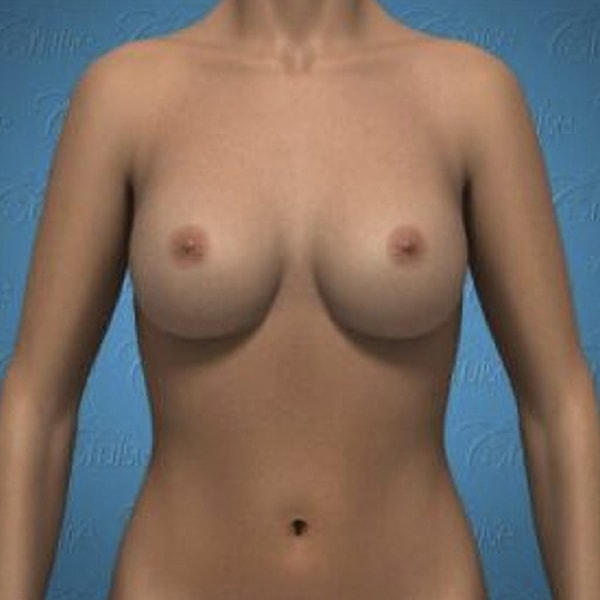
Implant position has a significant impact on overall breast appearance. Placing an implant in a high position actually means it is placed in the normal location of breast tissue. The implant is placed at the level of the breast crease.
However, the breast fold is not lowered significantly. This will create more upper breast fullness and better cleavage. Placing implants in a low position means that the implants are somewhat below the breast tissue. Lowering the breast fold a little will create a concave shape to the upper breast as demonstrated below. In addition, it will cause the nipple to elevate slightly. This may be useful in the borderline cases where a formal breast lift is not desired.
Lowering the fold too much will create a heavy, maternal look with no upper breast fullness. In general, if the nipples or the breasts are sagging, the best way to achieve a sexy, perky look is to raise them up.
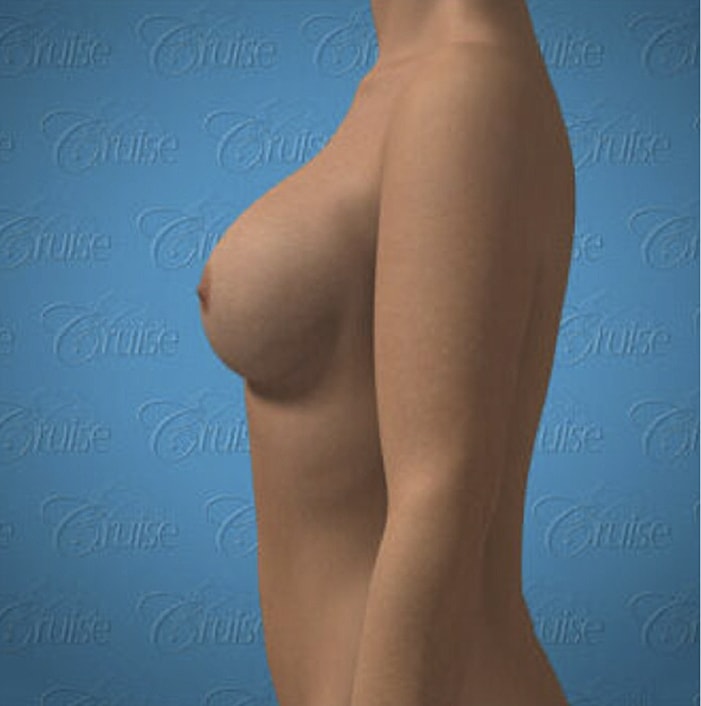
Notice the enhanced upper breast fullness and lower nipples
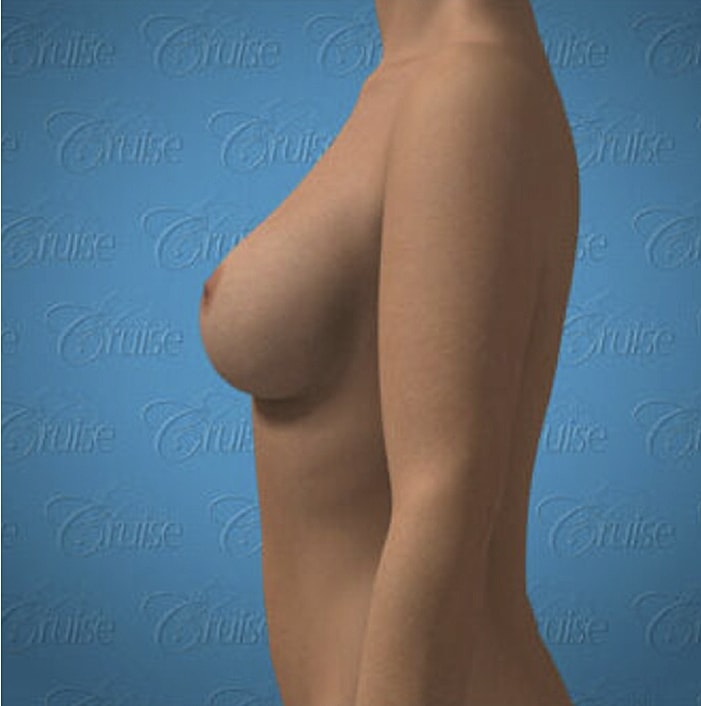
Notice the softer-appearing upper breast and lifted nipples

Click the images below in our breast augmentation size simulator to select the look you want in each category and complete the submission process. You will be contacted by a Cruise Plastic Surgery staff member, who will review your selections.
With breast augmentation procedure is performed under general anesthesia in an accredited surgical facility in Newport Beach. Dr. Joseph Cruise realizes that an important aspect of any surgery is the anesthesia and that many women are sensitive and suffer unpleasant effects from it.
In order to offer patients the most comfortable breast augmentation procedures possible, Dr. Cruise only works with Orange County board-certified anesthesiologists who are specialists in cosmetic surgery and provide gentle, outpatient anesthesia. The procedure itself usually takes 1 to 2 hours to perform. There are several options for incision placement during breast augmentation. Dr. Cruise will recommend the best approach based on your anatomy and the type of implant selected. Common breast augmentation incision patterns include:
When creating a pocket for breast implant placement, Dr. Cruise prefers to use the complete sub-muscular coverage technique, which greatly reduces the risk of the implant rippling, “bottoming out,” or migrating toward the armpit. Once the implants have been placed, the incisions are closed using meticulous techniques to reduce visible scarring. Patients go home the same day with detailed recovery instructions. Dr. Cruise personally oversees your follow-up care to ensure your results continue to settle beautifully over time.

Healing Beautifully, Inside and Out
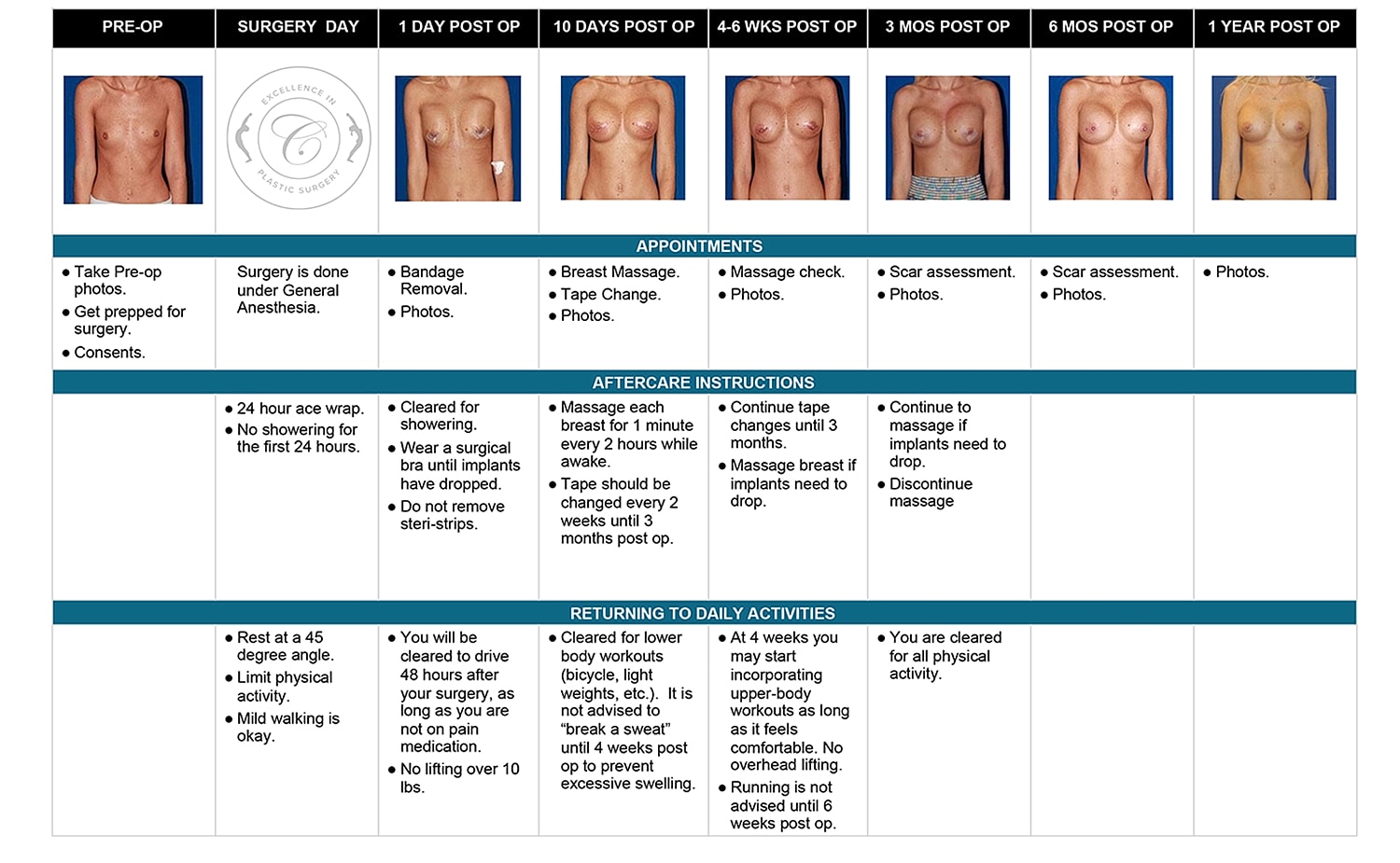
Understanding what to expect during recovery is key to deciding when to have your surgery. Dr. Cruise and his team will provide detailed aftercare guidelines and check your recovery progress at post-op visits.
Most patients return to light activities within a few days. Mild swelling, bruising, and tightness are common during the first few days. A surgical bra or soft support garment will be worn to help the implants settle properly. Strenuous exercise and upper body workouts are paused for about 4–6 weeks, depending on your healing progress. Dr. Cruise will instruct you on breast massage techniques to promote smooth healing and help your implants settle into their final position.
Recovering After Breast Augmentation Surgery
“80% of your results come from surgery, 20% from aftercare”
Below are two instructional videos about post-operative breast massage. One is for asymmetrical breast healing and other other for general healing.

View Dr. Cruise's extensive gallery of breast procedure before and after photos here Breast Galleries
Where Vision Meets Expertise
During your initial meeting with board-certified plastic surgeon Dr. Joseph Cruise, you'll soon realize the beautiful results you can achieve together.
atients love Dr. Cruise's innovative technique for achieving a natural-looking shape and enhanced volume through breast augmentation. If you are looking for the best breast augmentation surgeon in Orange County, CA, he is an exceptional choice. If you're ready to take the next step, or simply learn more about this procedure and what it can do for your appearance and self confidence, contact us today! You can reach Cruise Plastic Surgery by calling 949-644-4808 or filling out our online contact form

Most women prefer not to have visible scars from breast augmentation since it can make them look “operated on.” As a board-certified plastic surgeon, Dr. Cruise makes great effort to minimize breast augmentation scarring for the most natural-looking results.
With silicone implants, Dr. Cruise utilizes a funnel insertion device. This eases the effects of the surgery and decreases the size of the incision and of any potential scar. He puts meticulous detail into closing incisions and tapes them after surgery, reducing tension to help the scars heal to remain thin and flat.
For a saline implant, the incision can be very small and inconspicuous, as the implant is inserted prior to being filled with the saltwater solution, ensuring scars are as minimal as possible. This technique is sometimes referred to as minimally invasive breast augmentation or endoscopic breast augmentation.
Yes, all breast implants come with a warranty. However, the coverage does vary from manufacturer to manufacturer and the type of implant—saline or silicone.
It is possible for breast implants to cause pain years later. This can be caused by capsular contracture, injury/trauma, rupture, or movement of the implant, to name a few
Implants are not considered lifetime devices, but it is possible they could last thirty years or even longer. The life of breast implants varies from person to person. It should be noted that the longer you have breast implants, the greater the chance you will develop a complication.
A good option for women who desire increased breast fullness but do not want breast implants or for those whose body did not respond well to breast implants is fat transfer. Using one's own fat is a natural way of augmenting the breasts to improve volume and shape.
Following breast augmentation Orange County patients commonly experience some discomfort and restricted movement of the chest and arms. While you are able to move your arms, it is advised to reduce the amount of strain to the upper body. This means no heavy lifting or upper body workouts, and keeping activity to a minimum during the initial stages of the healing process.
You can breastfeed after breast augmentation, but there is no guarantee that a full supply of milk will be produced.
Breast implant illness (BII) is a term used to refer to a wide range of symptoms that can develop after undergoing augmentation with breast implants. It is also sometimes referred to as autoimmune syndrome. BII can occur with any type of breast implant and at any time after the procedure. Many of the symptoms are associated with autoimmune and connective tissue disorders, such as lupus and rheumatoid arthritis. Currently, there is no specific testing that can positively confirm the symptoms are directly a result of the breast implants. While many women who have had their breast implants removed state that their symptoms improved or were resolved completely, this isn't the case for all. In many, but not all, cases, surgery to remove the breast implants improves or completely resolves the BII symptoms.
It is possible for the breasts to sag after augmentation. This typically happens when a breast lift is needed but wasn't performed as part of the procedure. It can also happen after pregnancy or as a result of weight fluctuations and the aging process. Breast augmentation can help counter the effects of future breast sag.
Breast implants do not need to be replaced every 10 years, but it is advised to periodically have imaging done to be sure there are no issues. The longer you have breast implants, the greater the chance a complication could arise.
Some women experience weight gain after undergoing breast augmentation surgery. While a small amount could be attributed to the presence of breast implants, there are other factors such as swelling, inactivity, and an unhealthy diet during the recovery period. Most women easily shed the extra weight once they are cleared to resume all physical activities.